Contamination - Help Us Keep Big Green Clean!
Published on January 15, 2026
It's Time to Be Frank, OKC!
If you're one of the 43% of customers who participate in Oklahoma City's curbside recycling program, thank you. Each time you roll your Big Green recycling cart to the curb, you’re helping to divert good, reusable materials away from the landfill and supporting a circular economy. We truly appreciate the effort.
But… we’ve got a problem. And like many problems, the only way to fix it is to confront it head-on.
That problem is contamination.
What's Going Wrong?
|

|
|
Despite ongoing outreach and education, we continue to see too many items in Big Green carts that simply don’t belong there. Over the past two to three quarterly audits, our contamination rate has been increasing.
Most recycling programs operate with a contamination rate between 17% and 23%, which is where we want to be. Oklahoma City’s rate, however, is over 30%... and growing.
While that means about70% of what goes into Big Green is successfully recycled, which is a good thing, more than30% is rejected and sent to the landfill. This not only costs money but creates seriouschallenges at our recycling facility.
|
What is Contamination?
Simply put, contamination is anything not accepted in Oklahoma City’s recycling program.
This includes:
- Items that cannot be recycled at all (aka trash)
- Items that may seem recyclable (or even have a chasing arrow symbol) but aren’t accepted locally
Even well-intentioned recycling (aka Wish-Cycling) can cause problems if the item isn’t on our accepted list. And those trash items? They often come from customers using their Big Green recycling cart as an additional trash cart.
We need that to stop!
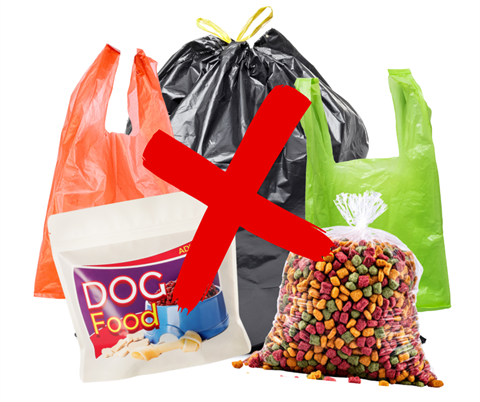
The Biggest Offender? Plastic bags.
|
These include:
- Grocery and shopping bags
- Trash bags (even when filled with good recyclables)
- Plastic film and wrap, like packaging around cases of bottled water
|
|
|
While plastic bags may be recyclable, they are not accepted in Oklahoma City’s curbside recycling program.
Why Are Plastic Bags Such a Problem?
|
|
|
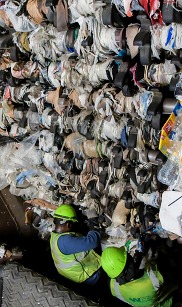
Unlike items such as plastic cups, bottles, paper, cardboard, cartons and aluminum cans, plastic bags, film, hoses, cords, clothing and similar items can get wrapped around the equipment used to help move recyclable items along the sorting stream.
If you've ever cleaned out the roller on a vacuum cleaner, you know just what we're talking about.
This tangling causes three major issues:
- It can jam or break equipment
- It can shut down our processing
- To clean out equipment, employees must stop operations to manually cut out the bags -- creating significant safety risks
|
This is why we ask customers to leave out the plastic bags and either reuse them at home, toss them in Big Blue, or take them to their local big box or grocery store, many of which accept plastic bags in special recycling receptacles.
Other Common Contaminants
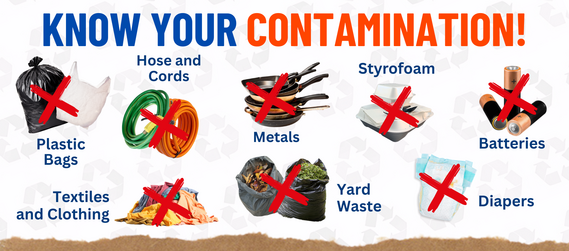
Plastic bags may be the biggest issue, but they’re not the only one. Common contaminants include:
- Food or liquid left in containers
- Garden hoses, cords and ropes
- Clothing and textiles
- Metals
- Yard waste, dirt and rocks
- Styrofoam
- Batteries and electronics
- Diapers and sanitary products
What Does Go in Big Green?
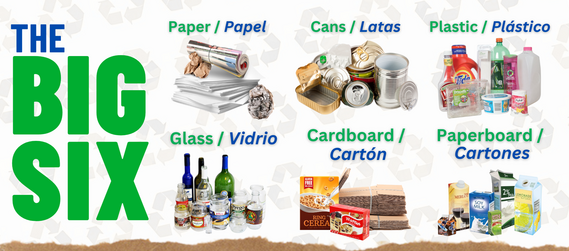
We accept what we call the BIG SIX:
- Paper
- Aluminum and steel cans
- Plastic household bottles, tubs, and containers
- Glass bottles and jars
- Clean and flattened cardboard
- Paperboard cartons
When only these items go in Big Green, the OKC recycling system works as intended.
Help Keep Recycling Working
Keeping contaminants out helps ensure the materials you recycle actually get recycled—and that’s a win for everyone.
Not sure where something goes? Don’t guess. Use the What Goes Where tool to check before you toss. And when in doubt, throw it out—helping keep OKC's recycling running smoothly.